

The place with the gazing globe and the pyramid trellis has changed from 2 days ago:


Shyamalan leaves little to the imagination in depicting man's nature-inflicted suicide. We see a woman stab herself in the neck with a hair pin. A man runs himself over with a lawnmower. On can't help but leave the theater thinking that Shyamalan derives a sick, masochistic pleasure in showing the deaths of all his bit characters, hopeless rubes are these human beings. They drove their SUVs for too long and had a big carbon footprint and now they're go.Ugh! Obscene.
Is it real?
Is it fake?
Is this game of life a mistake?

"They're the NIMBYs and CAVEs — Not In My Backyarders and Citizens Against Virtually Everything," [says a Cross Plains farmer Jerome Esser]. "This town was great before they came. Now the newcomers want many of the things changed that made it great.".
The new arrivals buy up land "that our forefathers cleared for farmland," then plant trees and treat it like a city backyard....
[A retired research psychologist who moved to Cross Plains in the mid-'60s, Bob] Bowman says the real debate isn't between old and new so much as a "difference in ideology" between opposing factions. He says the town of Cross Plains is under growing pressure from "pro-rail, anti-development, Progressive Dane liberals." And while liberalism is supposed to be about freedom, "liberals in Madison are arguing now for regimentation over classical 'free to disagree' tradition."
[T]he prospect of using the decision as a rallying point seemed to occur to many conservatives simultaneously. The ruling has “teed up the Supreme Court issue nicely for the G.O.P.,” Curt Levey of the Committee for Justice, a group that advocates for Republican judicial nominees, wrote on his blog. The Wall Street Journal’s editorial page quoted Justice Robert H. Jackson’s famous observation that the Constitution is not a suicide pact and added, with reference to the author of Thursday’s majority opinion, “About Anthony Kennedy’s Constitution, we’re not so sure.”
On the other end of the spectrum, liberals warned that the vision of civil liberties embraced by the court’s narrow majority — security requires “fidelity to freedom’s first principles,” Justice Kennedy wrote — was hanging by a thread. “One more Bush justice on the court and the decision would likely have gone the other way,” said Kathryn Kolbert, president of People for the American Way. Senator Barack Obama, the presumed Democratic nominee, praised the decision as “an important step toward re-establishing our credibility as a nation committed to the rule of law.”
I ... had to watch ["Meet the Press"]. Every Sunday. He just made the news seem so much more serious, even momentous, than anyone else did.Much more at the link.
Above all, he forced our leaders to explain themselves -- to answer the tough questions that everyone was raising about them.
And he did this with everyone, never seeming to discriminate based on party or ideology. I remember when John Edwards had a disastrous performance on Meet the Press in the 2004 race -- many commentators saw it as a major obstacle to him in trying to win the Democratic nomination. And I remember seeing him interview John McCain back in 2006, when he was just a "probable presidential candidate" .... Without being unfair, and even though he gave McCain ample time to defend himself, Russert left no doubt that McCain had shifted far to the right of his maverick/centrist past in preparation for the Republican primaries. At the end of the interview, McCain acknowledged his discomfort: "I haven’t had so much fun since my last interrogation."
Msnbc: Who do you have coming up on Meet the Press?Meet the Press! But it was not to be Meet the Press for him. It was to be: Meet your Maker. Ah, Tim Russert. I'm going to miss that guy so much. I almost want Barack Obama to pick Joe Biden... and John McCain to pick Lindsey Graham... as a tribute to our great journalist Tim.
Russert: We’re going to talk big issues with a debate: Obama vs. McCain. Joe Biden will represent Barack Obama; Lindsey Graham will represent John McCain.
Msnbc: Do you think Lindsey Graham might be on the ticket with John McCain?
Russert: I think he’s on the list. South Carolina is a solid state, but McCain really likes his passion and his ability to be on the attack against the Democrats on these foreign policy issues. I think Biden is someone who’s very much on Obama’s list because of his wealth of foreign policy experience, his knowledge of the Iran and the Iraq. It’ll be interesting. They’re both coming into the studio. It could be an vice presidential audition. A Meet the Press audition, coming your way Sunday, on Meet the Press!
"In light of the public controversy surrounding my involvement in this case, I have concluded that there is a manifest necessity to declare a mistrial."And he's asked for an investigation of himself.
Damn. That was the one non-Fox show where I could control the message.And it's downhill from there:
i say good riddance.This push-back sort of restores my faith:
he was the best example of the worst of journalism today.
we should not forget his role in helping get this war started.
after all, cheney went on his show because he knew that he would be able to "control" the message.
he was a fraud and a hypocrite and the world will be better off with him gone.
the only people who will miss him will be the republican politicians who knew they could go on his show and lie with impunity.
Posted by frankie d | June 13, 2008 4:22 PM
So now people feel the need to say what a great guy he was? Now I hope we can get someone that will ask real questions and not just gotcha's.
Posted by rob | June 13, 2008 4:24 PM...
so all of a sudden we are supposed to forget about all of the outrageously harmful things people like russert do?
if he had practiced his craft of journalism, there is a very good chance that we would have never gotten involved in such a harmful war.
if people like condi rice and cheney did not feel that they could go on his show and lie through their teeth about matters of life and death, it is very possible that they would have never felt comfortable lying, continually to the american people.
if he had actually been the "tough questioner" he supposedly was, perhaps he would have actually torn cheney's smug assurances about the coming war to shreds and the administration would not have taken us to war and wasted thousands of american lives and hundreds of thousands of iraqi lives.
he'll have to deal with his complicity in his own terms, but i have no qualms about pointing out a bunch of inconvenient truths.
if pointing this out makes me a dick and less than a class act, i wear that proudly.
Posted by frankie d | June 13, 2008 4:40 PM
Good to know I'm not the only one Sam. Seemed like a decent enough guy. This really is going to ruin my R. Kelly, "not guilty" party tonight.
Posted by laborlibert | June 13, 2008 4:40 PM...
Might the D in Frankie D stand for dipshit? You sound like AJ on the last season of the Sopranos.Oh, those last 2 comments were by the same guy!
Posted by laborlibert | June 13, 2008 4:51 PM
... Russert loved life you say? What a sick thing to say when you have read the kind of qualms that have been raised about Russert's moral shortcomings on this thread.
What about those million dead Iraqis? I bet they loved their lives too until they were ended by unsought and unjustified violence -- as opposed to gluttony.
Posted by The Fool | June 13, 2008 6:34 PM
So Meet the Press thrives, delighting precisely the sort of person who doesn't realize that a hardball is a kind of ball whereas a curveball is a kind of pitch.
Actually, the balls Russert favors may be hard, but the pitches he throws aren't curveballs, which go someplace useful. They're sillyballs, which go somewhere pointless. Russert has created a strike zone of his own where toughness meets irrelevance....
Russert's goal isn't to inform his audience. He's there to "make news"—to get his guest to say something embarrassing that lands in the next day's papers or on the NBC Nightly News. The politicians, in turn, go on the show determined not to make news. And why do they bother? Because... it's a rite of passage, and any politician too chicken to play Russert's inane games would never garner the respect of the political class.
The site was not "on the web" in the sense of a site open and inviting anyone to come in. It had a robots.txt file to indicate its contents were not to be indexed. That someone got in is testimony to the fact that security -- everywhere -- is imperfect....In the comments, after a challenge — "I'm sorry, but there's no way that typing a URL into a web browser is analogous to jiggling a lock for 30 seconds" — Lessig backs away from the idea that the analogy is perfect:
I don't accept that this is a "public place" just because the public can easily get to it. But I'm also not arguing that someone should be treated as a trespasser because he or she wanders through a directory structure. My only point is that it was plain beyond doubt that this was not intended as a public place where anyone was invited to come and browse. Norms of privacy should therefore apply.Another commenter — James Nightshade — pushes back:
Robots.txt is a voluntary access control mechanism, but it does not prevent resources from being "on the Web" in any sense. The document describing the robots.txt standard refers specifically to web robots. Robots.txt was not intended to apply to interactive web browsers. It is roughly analogous to a sign one might find beside a residential street: "No trucks except for deliveries." The street is still a part of the road network, even if some vehicles are asked not to visit.I'm not buying the analogy, but I get it that Lessig is trying to promote privacy on the web. Or not on the web. Whatever. I have a lot of trouble seeing what the "disgruntled litigant" did as "hacking" or trespassing.
Another example is the form I'm typing this into. It has an accompanying CAPTCHA form to identify robotic spam submissions. Blocking these robots doesn't effectively take the submission form off the Web. If one wants to avoid public access to a Web resource, there are access control mechanisms which can do that. Passwords are one example; robots.txt is not an example.
The Supreme Court ruled Thursday that foreign terrorism suspects held at Guantanamo Bay have rights under the Constitution to challenge their detention in U.S. civilian courts.Justice Kennedy writes for the 5-4 majority. Chief Justice John Roberts, for dissenting, accepted the government's "generous set of procedural protections."
“Canadians do not have a cast-iron stomach for offensive speech,”[said Jason Gratl, a lawyer for the British Columbia Civil Liberties Association and the Canadian Association of Journalists.] “We don’t subscribe to a marketplace of ideas. Americans as a whole are more tough-minded and more prepared for verbal combat.”...
A 1990 decision from the Canadian Supreme Court, for instance, upheld the criminal conviction of James Keegstra for “unlawfully promoting hatred against an identifiable group by communicating anti-Semitic statements.” Mr. Keegstra, a teacher, had told his students that Jews were “money loving,” “power hungry” and “treacherous.”
Writing for the majority, Chief Justice Brian Dickson said there was an issue “crucial to the disposition of this appeal: the relationship between Canadian and American approaches to the constitutional protection of free expression, most notably in the realm of hate propaganda.”
Chief Justice Dickson said “there is much to be learned from First Amendment jurisprudence.” But he concluded that “the international commitment to eradicate hate propaganda and, most importantly, the special role given equality and multiculturalism in the Canadian Constitution necessitate a departure from the view, reasonably prevalent in America at present, that the suppression of hate propaganda is incompatible with the guarantee of free expression.”
Who stashes their porn on the internet? Other than porn stars?IN THE COMMENTS: Simon says:
Kozinski long has been regarded as one of the smartest guys on the federal bench. Do we need to rethink that?
One would think that so notoriously tech-savvy a judge would be more conversant with the technology - and more careful.One could deduce that he wanted to be caught ... or got a thrill from risking getting caught. You know, it might be tiresome for a certain sort of person to be a judge. There you are, for life. Well set up, but restricted, restrained, forced to be sober — forbidden to be fully expressive. Oddly, I had a conversation with Alex Kozinski about exactly this subject 20 years ago. Kozinski was only 35 years old when he was appointed, and that was 23 years ago.
[Kozinski's] involvement in the case may be a stroke of luck for Isaacs. That is because Kozinski is seen as a staunch defender of free speech. When he learned that there were filters banning pornography and other materials from computers in the appeals court's Pasadena offices, he led a successful effort to have the filters removed....I'd like to know what set of events led to the L.A. Times article.
Isaacs said he would testify as his own expert witness at trial and planned to lecture jurors on how perceptions of art have changed over the years. There was a time, he said, when the works of authors James Joyce and D.H. Lawrence were called obscene.
The point, Isaacs said, "is do we really want to throw artists in jail in America?"...
[The Obscenity Prosecution Task Force] has won convictions in more than a dozen cases, the vast majority resulting from plea bargains....
[Isaacs] said that prosecutors have made several overtures inviting him to take a plea in the case, but that he has refused every time....
"If I get convicted and go to prison now," Isaacs said, "I go as an artist."
In a telephone interview on Wednesday afternoon, Judge Kozinski ... said the Web site was meant to be private and that several people had contributed to it. “There is a ton of stuff on there,” Judge Kozinski said. “It’s not a porn site. There’s some funny stuff on there.”Oh, well, if he doesn't think it's embarrassing, then maybe I shouldn't be critical of the press for publicly humiliating him.
Judge Kozinski said his son, Yale, maintained the site, which had the domain name of kozinski.com. Yale Kozinski, a film editor, confirmed that, as do Internet registry records for the site.
“This server is my private Web server,” Yale Kozinski said. “It’s owned by me. The domain is registered to me. The people who have access to put files up there are friends and family.” Among other things, he said, the site contained family photos and a collection of the judge’s articles.
The Los Angeles Times reported that Judge Kozinski had conceded posting some of the offensive materials. In interviews on Wednesday, neither Judge Kozinski nor his son could say who posted what, and Judge Kozinski said he might have uploaded some materials by mistake.
The site was never meant to be public, Yale Kozinski said. “The fact that it was publicly accessible actually is my fault, too,” he said. “I made a mistake in configuring it.”
Judge Kozinski said he was only moderately contrite.
“I guess I should be more careful about access and all,” he said. “I didn’t put anything on there I think would be embarrassing.”
I discovered this information on Xmas Eve, 2007. * * * * I immediately downloaded so much material that his internet provider cut him off. When the site went back up, Judge Kozinski had removed some of the biggest video files. * * * * I pitched it to the Daily Journal, the Recorder, the LA Times and the WSJ through end of January 2008. I was interested in his site because of my renewed misconduct complaint against Judge Kozinski...The NY Sun has this:
The LA Times reporter I contacted, Henry Weinstein (who extensively covered the Manuel Real stuff) said he would get to it, then he took the buyout. I contacted Scott Glover, the reporter on the obscenity trial, last Sunday, June 8, 2008. He knew nothing about my prior contact with the LA Times; but that institution is in disarray because of the well-covered restructuring. Therefore, it would not be fair to say that the LA Times "held it". The institutional knowledge of my prior contact disappeared * * * *
The judge's trouble with Mr. Sanai began in 2005, when the attorney wrote an article with examples of 9th Circuit judges allegedly ignoring circuit precedents. Judge Kozinski wrote a rebuttal that noted Mr. Sanai's personal stake in one of the disputed issues. The attorney, who had a motion pending in that case, filed a complaint alleging that the judge broke rules barring judges from commenting or lobbying on pending cases. The complaint was dismissed, but Mr. Sanai refiled it after the judge re-posted the article on the same site with the explicit photos.Here's some analysis of the L.A. Times's journalism standards, from the Carnegie Reporting Program:
The key question is whether it would have been a story if Kozinski weren't presiding over an obscenity trial at the time...
I say yes. Kozinski is a high-ranking judge whose court hears more obscenity cases than the current one. Controversy over the line between erotica and obscenity is legal news, and Kozinski's misfortune provides a teaching moment to explore the current state of the law. Kozinski has a track record as a critic of government intrusion into personal use of the Internet. Publishing a story without the trial as a news hook would be extremely uncomfortable, but I would have green-lighted it and placed the revelations in the context of Kozinski's disputes with Sanai and over Internet use. As for the Times, there should be no question that it did the right thing under the circumstances.
Hobie: I think it'd be only fair to tell you. I'm a liberal.
Stacey: Oh. Are you talking politically, or in the bedroom?
Hobie: I was talking politically. In the bedroom, I'm a left-wing liberal.
Stacey: In the bedroom, I'm a radical.
Hobie: Look, can I level with you? In the last few months of my marriage, I really didn't sleep with my wife. We weren't sleeping at all. I'm a little out of practice. So, you know, I'm a little out of practice. Politically speaking, I'm ready for a little affirmative action.
Stacey: What do you say we blow this joint and go back to your place?
Hobie: My place? Yes, by all means. It would be great. So you're not going to hold the fact that we have conflicting viewpoints on the direction America should take against me? I mean, I'd hate to get all worked up and find we differ on tax cuts.
[T]hose of us on the right who pay attention to think tanks, blogs, and little magazines have watched Obama compile a coterie drawn from the movement's most stalwart and impressive thinkers. It's a group that will no doubt grow even larger in the coming months.
The largest group of Obamacons hail from the libertarian wing of the movement....
In nearly every quarter of the movement, you can find conservatives irate over the Iraq war--a war they believe transgresses core principles. And it's this frustration with the war--and McCain's pronouncements about victory at any cost--that has led many conservatives into Obama's arms...
[Some conservatives are] impressed by Obama's rhetorical acumen....
But, if you're looking for the least likely pool of Obamacons, it would be the supply-siders....
The strategy reinforces the central role that blogs have come to play in shaping and framing the issues in the 2008 presidential election. The question is whether sending supporters to do grassroots lobbying in the comments section of activist blogs like DailyKos, whose membership is dedicated to defeating the Republicans in the general election, will really benefit McCain's campaign.So what is the problem, really? I don't think it's wrong to encourage your supporters to participate in the comments sections of a wide range of blogs. What's bad is to send out hordes of people who don't know how or don't care to become part of the comment community they enter. That is destructive to the blogs, and it doesn't help the candidate.
"I find it hilarious that McCain's campaign thinks that some astroturf copy-and-paste comments would do anything more than spark some vicious mocking," says Markos Moulitsas, founder of DailyKos, which is currently highlighted as one of three "featured blogs" on McCain's site.
On Memorial Day weekend for example, someone named "Jerry A" posted a news story in an open thread on DailyKos about McCain inviting Barack Obama to visit "post surge" Iraq. At the time, Republicans had launched a publicity campaign criticizing Obama for formulating Iraq policy without having visited the country for two years.
Four minutes later, "Cultural Worker" responded: "Thank you for sharing McCain's talking points of the day. Again."
[P]eople are entitled to choose their spouses based on any reason at all, and to my knowledge French law allows them to agree to divorce based on any reason at all (again, at least if both agree). Saying that they may also annul the marriage based on any misrepresentation that they saw as material strikes me as no different: It's an accommodation of people's choices about whom to have a tremendously important relationship with, and we should generally accommodate those choices even when we think they are partly unwise — I say partly because while the insistence on virginity strikes me as unsound, the concern about the lie strikes me as much more proper — or reinforce unsound community attitudes.
You young whippersnappers with your newfangled folding computers—what a waste of time reading that facebook. Why, in my day we didn’t have such nonsensical tomfoolery, we couldn’t count but to 20 cause that’s all the fingers and toes we had. And the only people surfin was them pretty boys in Californy. Ahhh, flibbity gibbit.The article ends with a quote from Harvard Business School prof John Deighton: "Ultimately the only way to ensure that a class member is not on the Web is to conduct an engaging class." That reminds me of one of the things I said that was not used: Make understanding of what was said in class crucial to doing well on the exam. Students are not motivated only by what happens to interest them.
... [W]hen Mrs. Clinton was talking about herself, she was radiant, buoyant. She was gesticulating. She was smiling. When it came time to mention, not endorse, mention Obama, she read. There was no gesticulation. There was no animation. There weren't any smiles. A couple of smiles here and there, sort of like a McCain teleprompter smile it didn't fit when she did it.A McCain teleprompter smile... ha ha... so that's why he bursts into those odd smiles when he does?
[I]n that audience we had true believers. She mentioned Obama's name 15 times. She knew that every time she mentioned Obama's name because of the nature of that crowd that there were going to be people in there that would boo, and there were. And the boos were even audible to me and I am deaf.Please don't think someone else is writing Rush's monologues!
Now, if you are Mrs. Clinton and you are serious about unifying the party and bringing the party together and you know that your crowd's not happy about what you're going to do, that you're going to quit and they don't like Obama, you only mention his name once or twice, not 15 times. She gave that crowd 15 opportunities to boo Barak Obama. And they did.So saying his name a lot is the secret code that she's not really quitting?
I'm sitting there watching this and there's simply no way that this was a genuineI do think he's right. She's in sleep mode and can be reactivated the moment Obama slips too far. The Clintons are watching and waiting.-- she said the words, but she's looking down as she reads them, and then looks up at the audience in sort of a joker kind of smile kind of permanently on the face, an inanimate smile. I was watching this, and I'm listening to the Drive-Bys, particularly on NBC, and they're just having orgasms. "Oh, this is great, this is wonderful. The party is coming together," and all of this and all of that. And I'm saying, "You guys are so blind and so susceptible to the conventional wisdom. We're talking about a Clinton here. The Clintons don't go away." You'd have to show them a cross at sunup two inches from their eyes and even then they wouldn't go away....
She didn't release her delegates. Hold onto them, hells bells. And she can go out and she can raise money. She has to retire her debt and so forth. She can do that up till the convention. She held on to her delegates, meaning if Obama slips and falls....
And, indeed, as he listened to the cries of joy rising from the town, Rieux remembered that such joy is always imperiled. He knew what those jubilant crowds did not know but could have learned from books: that the plague bacillus never dies or disappears for good; that it can lie dormant for years and years in furniture and linen-chests; that it bides its time in bedrooms, cellars, trunks, and bookshelves; and that perhaps the day would come when, for the bane and the enlightening of men, it would rouse up its rats again and send them forth to die in a happy city.(Albert Camus, The Plague.)
... Justice Scalia did not need a cigarette. But when Parker asked for a light for hers, he provided it (as any Old World-style gentleman like Scalia would, we might add).And he did not rush over to her and gush about how much he loved "Sex and the City" and was psyched about seeing the movie. You hear? There was no rush and gush.
Tutela, which is related to tutor, has to do with a protector or guardian. Valui appears to be a past form of the word strong.The Columbia professor gives Ashley credit — even as she tattoos herself with bad Latin — for seeing herself (or her body part) as the strong one and having a sense of humor about sex.
"So I guess you would say it means, 'I have a strong patron' or 'I have a strong keeper,'" said Doug Machle, assistant to the chairman in the classics department at the University of Washington.
"Or, actually, it's more like, 'My guardian was strong.'"...
Daniel Nodes, a classics professor at Ave Maria University in Florida, translated it as "I've been well and remain that way because I have protection."
Mark Buchan, a classics professor at Columbia, took a different tack, musing that it could mean "safe haven."


For nearly a year, this tiny southwestern Wisconsin village has struggled to survive after a devastating flood. New rising waters may have sealed its fate.Very sad for the beautiful little town nestled in the river valley.
Flash floods inundated the town of 625 over the weekend, just 10 months after residents worked to rebuild their homes and businesses.
The swollen Kickapoo River spilled over its banks again and engulfed nearly the entire town Monday morning, forcing about 150 people to evacuate. By evening, the village was reduced to a grid of canals with cars submerged up to their windows and parking lots looking like lakes, just as it was in August....
[R]esidents stood on the edge of their ruined town, so close to finally turning the corner before this latest flood.
"I can't believe this is happening again," said Liz Klekamp, 23....
The dam itself held, but a section of shoreline did not, washing out Highway A and creating a 400- to 500-foot wide outlet to the Wisconsin River, 700 feet away. A swirling chocolate malt of angry liquid escaped through the gap, spreading into the marsh and carrying houses, trees and an upside-down pontoon boat with it.
 But it's only $100. And it's a laptop. For poor kids all over the world. Nice! Mike Elgan said it's showing us the future of laptops — it's what we'll all want in 5 years:
Q&A How can McCain SIMULTANEOUSLY attract both Hillary AND Bob Barr voters?
Answer: PALIN Veep!”
It's not Outsider Art.
To be an Outsider Artist, you must possess some combination of the following:
a) an affinity for religious vision(s), especially if they involve Jesus, the Rapture, blood, tree roots, and devils;
b) no formal art training;
c) a grave illness/accident (ideally involving paralysis or loss of a limb;
d) alcoholism;
e) be from the South;
f) have little or no education and absolutely no law degree (unless thereafter you are forcibly imprisoned in a mental institution for 50 years and upon your death the bulk of your work (paper clip lint sculptures) is burned by insensitive orderlies);
g) be white or preferably black and lived a life of isolation from modernity;
h) be willing to do what gallery owners and auctioneers tell you to do;
i) concoct the most positively lurid depictions of sexual organs and acts;
j) wear clothes you have painted;
k) build electromagnetic energy devices and concrete statues in and around your polka-dotted shotgun shack;
l) invent a name for yourself; and
m) be mentally ill or at least seem that way to white-wine sipping Yuppies from Connecticut and Atlanta.


Mayhill Fowler says she never planned to ask Bill Clinton the question that unleashed a decidedly unpresidential tirade....A Wild Wild West of lawlessness — otherwise know as a marketplace of ideas.
Fowler had her tape recorder going when [Barack Obama] made his ill-fated remarks about frustrated small-town residents turning to guns, God or anti-immigrant sentiments....
Mary Katherine Ham, a conservative blogger, says that while she would insist on identifying herself, "politicians need to learn that anyone can break news, and citizens who run into you -- even if you're not writing for the Huffington Post -- can post it anywhere."
In an e-mail, Fowler says she has come to realize that her presence "flummoxes some longtime journalists -- because suddenly here I am, unpaid but as a consequence with much more freedom to find out what's going on out there, and writing for a new and encroaching media that is a Wild Wild West of lawlessness."
The liney/painterly dichotomy persists to this day, and in the century since [Winslow] Homer's last works it has taken many forms. The dry, burnished literalism of Grant Wood and Charles Sheeler followed the ebullient impressionism of Childe Hassam and William Merritt Chase. Thomas Eakins is liney, John Singer Sargent is not; Andrew Wyeth is liney and Edward Hopper not. Among the Abstract Expressionists, Jackson Pollock achieves his signature effects with a welter of lines, and Mark Rothko achieves his by blurring all edges. Among Pop artists, Roy Lichtenstein takes the comic-strip lines and Benday to a majestic scale, while Andy Warhol remains a colorist above all. All, it might be said, employ highly personal techniques to confront the viewer with something vitally actual, beyond illusion.From the same issue of NYRB, the theme of perception, order, and chaos continues:
Two centuries after Jonathan Edwards sought a link with the divine in the beautiful clarity of things, William Carlos Williams wrote, in introducing his long poem Paterson, that "for the poet there are no ideas but in things." No ideas but in things. The American artist, first born into a continent without museums and art schools, took Nature as his only instructor, and things as his principle study. A bias toward the empirical, toward the evidential object in the numinous fullness of its being, leads to a certain lininess, as the artist intently maps the visible in a New World that feels surrounded by chaos and emptiness.
In fact, "external reality" is a construction of the brain. Our senses are confronted by a chaotic, constantly changing world that has no labels, and the brain must make sense of that chaos. It is the brain's correlations of sensory information that create the knowledge we have about our surroundings, such as the sounds of words and music, the images we see in paintings and photographs, the colors we perceive: "perception is not merely a reflection of immediate input," Edelman and Tononi write, "but involves a construction or a comparison by the brain."Draw lines.
53. "I can't make her younger.... There's lots of things I can't do."
63. "Thanks for the question, you little jerk."
65. "WHAT DI DHE DO AFORE HOW LONG AND WITH WHO ?? PLS TELL BOB HELLO BOB"
[P]atients need a prescription to acquire medicinal marijuana, but the law gave little guidance as to how people were to acquire it. That gave rise to some patients with marijuana prescriptions growing their own in limited quantities, the opening of clubs to make it available and growers going large scale to keep those outlets supplied.If you make an exception in the law that bans something many people want to do — and do even when it is illegal — that exception is going to be exploited. But here, it seems, you have activity far beyond the original exception and a drastic failure of law enforcement. If the law isn't enforced, it's no wonder more and more people flow into the activity.
In turn, that led to the kind of worries that have bubbled up in Arcata, home of Humboldt State University, where town elders say roughly one in five homes are “indoor grows,” with rooms or even entire structures converted into marijuana greenhouses.
That shift in cultivation, caused in part by record-breaking seizures by drug agents of plants grown outdoors, has been blamed for a housing shortage for Humboldt students, residential fires and the powerful — and distracting — smell of the plant in some neighborhoods during harvest....
In May, Arcata declared a moratorium on clubs to allow the city council time to address the problem. Los Angeles, which has more than 180 registered marijuana clubs, the most of any city, also declared a moratorium last year.
“There were a handful initially and then all the sudden, they started to sprout up all over,” said Dennis Zine, a member of the Los Angeles City Council. “We had marijuana facilities next to high schools and there were high school kids going over there and there was a lot of abuse taking place.”
Drugs like marijuana are fungible commodities. ... [M]arijuana that is grown at home and possessed for personal use is never more than an instant from the interstate market–and this is so whether or not the possession is for medicinal use or lawful use under the laws of a particular State. Congress need not accept on faith that state law will be effective in maintaining a strict division between a lawful market for “medical” marijuana and the more general marijuana market. “To impose on [Congress] the necessity of resorting to means which it cannot control, which another government may furnish or withhold, would render its course precarious, the result of its measures uncertain, and create a dependence on other governments, which might disappoint its most important designs, and is incompatible with the language of the constitution.”The Court was asked to "accept on faith" that California would enforce the line drawn by its law. Here's Justice O'Connor evincing the requested credulity (boldface added):
Both federal and state legislation–including the CSA itself, the California Compassionate Use Act, and other state medical marijuana legislation–recognize that medical and nonmedical (i.e., recreational) uses of drugs are realistically distinct and can be segregated, and regulate them differently....If confronted with the evidence described in the article, would O'Connor concede she got it wrong? Probably not. She said she was talking about medicinal users who grow their own marijuana. The growers described in the article are clearly growing for others and engaged in commercial operations.
There is simply no evidence that homegrown medicinal marijuana users constitute, in the aggregate, a sizable enough class to have a discernable, let alone substantial, impact on the national illicit drug market–or otherwise to threaten the CSA regime. Explicit evidence is helpful when substantial effect is not “visible to the naked eye.” And here, in part because common sense suggests that medical marijuana users may be limited in number and that California’s Compassionate Use Act and similar state legislation may well isolate activities relating to medicinal marijuana from the illicit market, the effect of those activities on interstate drug traffic is not self-evidently substantial....
The Government has not overcome empirical doubt that the number of Californians engaged in personal cultivation, possession, and use of medical marijuana, or the amount of marijuana they produce, is enough to threaten the federal regime. Nor has it shown that Compassionate Use Act marijuana users have been or are realistically likely to be responsible for the drug’s seeping into the market in a significant way.... The Court ... says that the California statute might be vulnerable to exploitation by unscrupulous physicians, that Compassionate Use Act patients may overproduce, and that the history of the narcotics trade shows the difficulty of cordoning off any drug use from the rest of the market. These arguments are plausible; if borne out in fact they could justify prosecuting Compassionate Use Act patients under the federal CSA. But, without substantiation, they add little to the CSA’s conclusory statements about diversion, essentiality, and market effect.
In Arcata, a 29-year-old man, who asked that his name not to be used for fear of arrest, said that he earned about $25,000 every three months from selling marijuana grown in a back room to club owners from Southern California.Since it would be so easy to arrest these people, why are they not more afraid? Where is the enforcement? The NYT writes:
But others in Arcata are less welcoming. Kevin L. Hoover, the editor of the local newspaper, The Eye, has made a practice of confronting people he believes are growing marijuana. Their houses are easy to spot, he said — covered windows, tall fences, cars coming and going late at night. “Sometimes the whine of fans,” he said.
Also complicating law enforcement’s job is that marijuana is still illegal in the eyes of the federal government, which has been increasingly aggressive about prosecuting club owners they feel have crossed the line into commercial drug dealing.Why does this complicate local law enforcement? It seems to be that both state and federal law enforcement should target the same large-scale operations. The feds could go after the terribly sick patients with houseplants, but why would they, when there are all these far less sympathetic growers to prosecute?
Among those recently convicted in California include a doctor and his wife from Cool who were given five years each in March for conspiracy to sell marijuana and growing more than 100 plants; a club owner from Bakersfield who pleaded guilty in March to possession of 40 pounds of marijuana with intent to distribute; and Luke Scarmazzo, a 28-year-old club owner and aspiring rapper who faces 20 years to life in prison after a conviction last month for running a multimillion-dollar club in Modesto that the government called a criminal enterprise.How many are being prosecuted? Much as I like colorful details in news articles, I would sacrifice the knowledge that Scarmazzo is an aspiring rapper in exchange for some some comprehensive statistics about law enforcement.
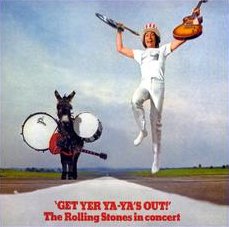
Do we also get to Kick Out The Jams?If you do, please do it this way — not this way. And it's NSFW to do it this way or this way.


IT MAY NOT HAVE BEEN ACCURATE, but it was smart! Allison Glock's New York Times piece on Knoxville contained this introduction: "KNOXVILLE is often called 'the couch' by the people who live there. It’s a place too unassuming to shout about but too comfortable to leave." That's a nice intro, but nobody in Knoxville can remember ever hearing it called "the couch." But thanks to that bit, Glock's story is the most-blogged item in the Times at the moment. My advice to travel writers -- always open your point with a minor error that's sure to get under local bloggers' skins, and watch your traffic and rankings soar!Oh, if only we could have been blogging back in 1992, when the New York Times published the ludicrous "Grunge: A Success Story," by Rick Marin:
LEXICON OF GRUNGE: BREAKING THE CODEOf course, Megan Jasper was just horsing around — she made the whole thing up — and the New York Times fell for it. You'd think, after all the embarrassment, they'd be really careful about reporting slang.
All subcultures speak in code; grunge is no exception. Megan Jasper, a 25-year-old sales representative at Caroline Records in Seattle, provided this lexicon of grunge speak, coming soon to a high school or mall near you:
WACK SLACKS: Old ripped jeans
FUZZ: Heavy wool sweaters
PLATS: Platform shoes
KICKERS: Heavy boots
SWINGIN' ON THE FLIPPITY-FLOP: Hanging out
BOUND-AND-HAGGED: Staying home on Friday or Saturday night
SCORE: Great
HARSH REALM: Bummer
COB NOBBLER: Loser
DISH: Desirable guy
BLOATED, BIG BAG OF BLOATATION: Drunk
LAMESTAIN: Uncool person
TOM-TOM CLUB: Uncool outsiders
ROCK ON: A happy goodbye
My time with Dylan is up and we stand in preparation for my leaving the room. As a last aside, I ask for his take on the US political situation in the run-up to November's presidential election.I've been listening to the words of Bob Dylan, taking them seriously, and trying to interpret them since the 1960s, so I'm ready to analyze this. In typical Dylan style, it's enigmatic. Let's study it line by line.
“Well, you know right now America is in a state of upheaval,” he says. “Poverty is demoralising. You can't expect people to have the virtue of purity when they are poor. But we've got this guy out there now who is redefining the nature of politics from the ground up...Barack Obama. He's redefining what a politician is, so we'll have to see how things play out. Am I hopeful? Yes, I'm hopeful that things might change. Some things are going to have to.” He offers a parting handshake. “You should always take the best from the past, leave the worst back there and go forward into the future,” he notes as the door closes between us.
I was even more surprised that Bob Dylan said that he supports Barack Obama this past week. I do not remember Dylan ever endorsing a candidate for political office before.Then Meade said:
L.E.Lee, It's widely known that, like Hillary was, Bob Dylan was a supporter of Barry Goldwater in 1964.Lee had trouble believing that, and Meade told him to look it up. It's in Dylan's book "Chronicles." This was a cue to me, because I blogged "Chronicles" chapter by chapter in 2004 — click the "Dylan's Chronicles" label — and I knew I had something on Goldwater. Yes, here:
Dylan's favorite politician: Barry Goldwater. P. 283.So, what does all this add to the analysis of his "endorsement" of Barrack Obama? I think we can say that door-closing Dylan is not that comfortable with talk about politics. In the book, that statement "I liked the old news better" got him to talking about his interest in reading history. His love of Barry Goldwater had something to do with style and cowboys. Here's Tom Mix. I can see the Goldwater resemblance. But why would Dylan say he liked Goldwater and give that as the reason? He's playing with us, hiding again, letting us know he's different from other people — he thinks with a poet's logic. Ordinary political people bother him. (So a politician who could "redefine" politics might appeal to him in a special way.)
Why: "[he] reminded me of Tom Mix."
Bob Dylan song that mentions Goldwater: "I Shall Be Free, No. 10."
Now, I'm liberal, but to a degreeA Bob Dylan political opinion: "I wasn't that comfortable with all the psycho polemic babble. It wasn't my particular feast of food. Even the current news made me nervous. I liked the old news better." P. 283.
I want ev'rybody to be free
But if you think that I'll let Barry Goldwater
Move in next door and marry my daughter
You must think I'm crazy!
I wouldn't let him do it for all the farms in Cuba.
I'm just average, common tooSo he's playing a character. Obviously, not Bob Dylan, who's very different from us and whom there is use in talking to, because it's not at all the same as talking to yourself. The "I" here is a comical everyman — the ultimate conformist. But then the lyrics proceed in lots of different directions, and sometimes the "I" is Dylan, but I think the Goldwater verse is not Dylan. It's a hypocritical liberal whom Dylan mocks. The liberal wants freedom for all, but is ready to discriminate against the conservative: "I want ev'rybody to be free/But if you think that I'll let Barry Goldwater/Move in next door and marry my daughter/You must think I'm crazy!"
I'm just like him, the same as you
I'm everybody's brother and son
I ain't different from anyone
It ain't no use a-talking to me
It's just the same as talking to you.
Now you're probably wondering by nowSo if you're probably wondering by now just what his "endorsement" of Barack Obama is all about... it's nothing. It's something he said over in Denmark.
Just what this song is all about...


 Posts
Posts


