"... which states: 'The public shall have a right of access to the commons on foot and on horseback for the purpose of open-air recreation.' Alexander Darwall, a City fund manager and Dartmoor’s sixth-largest landowner, tried to end that right by taking a legal case all the way to the Supreme Court, where he argued that camping was not 'open-air recreation' and the legislation meant that anyone caught sitting down to rest, picnic or paint on common land could also be sued by the landowner for trespass...."
"Kate Ashbrook, general secretary of the Open Spaces Society, said she would like to see a right to backpack camp in 'all open access country' in England, which is land the Countryside and Rights of Way Act 2000 gives a public right to walk across, such as mountain, moor, heath, down and common land.... 'We want a right of access to woodlands and watersides, places that were defined as open country in the Countryside Act 1968 but then nothing ever happened with that. Access close to homes would help the government with their target for green spaces within 15 minutes of everyone’s home.'"
"Thomas Mann assured us, 'Thoughts come clearly while one walks.' J.K. Rowling observed that there is 'nothing like a nighttime stroll to give you ideas,' while the turn-of-the-20th-century novelist Elizabeth von Arnim concluded that walking 'is the perfect way of moving if you want to see into the life of things.'
And ask any deep thinker about the benefits of what Bill Bryson calls the 'tranquil tedium' walking elicits. Jean-Jacques Rousseau admitted, 'There is something about walking that animates and activates my ideas.' Even the resolutely pessimistic Friedrich Nietzsche had to give it up for a good saunter when he allowed, 'All truly great thoughts are conceived while walking.'"
Shaffer was the first person to through-hike the Appalachian Trail:
He travelled alone, walking around 17 miles a day. Shaffer packed light. He nixed a tent when he realized his poncho could double as a shelter. He mended his clothes, and cooked cornbread in a pan over an open fire. Shaffer made it over the rocks, roots, and rubble in just one pair of Russell Moccasin Company “Birdshooter” boots. He resoled them twice, and they were in tatters by the end.
The article says that Shaffer's motivation was to “walk the war out of my system.” The main focus of the article is Sean Gobin, a Marine veteran who through-hiked the Appalachian Trail and thinks it was good for his mental health:
Said an anonymous "senior [Trump] campaign official," quoted in "Trump’s Twitter feed reads like a local crime blotter as he stokes a culture war" by Josh Dawsey (WaPo). The "crime blotter" material in question is the vandalism aimed at public statues and monuments. And, yes, it makes sense for the Trump campaign to see this as a good issue for them, but they didn't start the unrest and destruction. It strikes me as unfair to say that he's "stoking" any kind of "war," when the protests and attendant violence arose out of police actions in particular cities (cities run by Democrats).
What did Trump have to do with that? Is he supposed to stand back and say nothing? His antagonists take whatever they can get, every single day, and spin it against him. Are they "stoking" a "war"? No, they're just doing their normal thing, plying their trade, writing columns like "Trump’s Twitter feed reads like a local crime blotter as he stokes a culture war" by Josh Dawsey in The Washington Post. Josh Dawsey is writing that and Trump is doing his tweets, taking the material of the day, and spinning it into an argument for his side.
Of course, he's going to improve his political standing by crying out against "the two Anarchists who threw paint on the magnificent George Washington Statue in Manhattan" and the rest of the violence toward inanimate objects. He sees and takes the advantage of embracing and extolling the icons in this time of iconoclasm.
Dawsey quotes the presidential historian Douglas Brinkley:
"His argument is Main Street values against a crazy wave of anarchy. A lot will depend on how inflamed the monument issue gets. Trump has a vested issue in this. He’s actually cheering the anarchists on, daring them to take more down."
He’s actually cheering the anarchists on... You see how that works (in the mind of the eminent historian)? Because Trump speaks out against the destruction and some people hate Trump, they're inspired to do more destruction. It's a way to get Trump. And you see the rank perversity of the implicit argument: Don't speak out against the destructiveness you oppose, because it will only inflame the destroyers, and they will do more destruction.
But look more closely: This dynamic of Trump taking advantage of the iconoclasm and the iconoclasts ramping up their destruction might hurt the moderate Democrats who are trying to win the 2020 elections. It's not a good issue for them, and hanging back and waiting for it to die down and go away on its own isn't working.
[D]uring the 2013 inauguration coverage, CNN referred to him as "a man who knows more about the presidency than just about any human being alive." In contrast, in 2006, historian Wilfred McClay in the New York Sun appraised Brinkley's scholarship as one that has failed to "put forward a single memorable idea, a single original analysis, or a single lapidary phrase." Similarly, author Bill Bryson characterized Brinkley as "a minor American academic and sometime critic whose powers of observation and generosity of spirit would fit comfortably into a proton and still leave room for an echo."
The story by Axios that President Trump wanted to blow up large hurricanes with nuclear weapons prior to reaching shore is ridiculous. I never said this. Just more FAKE NEWS!
Edward Teller, the semi-crazed Hungarian-born physicist who was one of the presiding geniuses behind the development of the H-bomb... and his acolytes at the Atomic Energy Commission envisioned using H-bombs to enable massive civil engineering projects on a scale never before conceived—to create huge open-pit mines where mountains had once stood, to alter the courses of rivers in our favor (ensuring that the Danube, for instance, served only capitalist countries), to blow away irksome impediments to commerce and shipping like the Great Barrier Reef of Australia.... They even suggested that nuclear devices could be used to alter the Earth’s weather by adjusting the amount of dust in the atmosphere, forever banishing winters from the northern United States and sending them permanently to the Soviet Union instead.... In short, the creators of the hydrogen bomb wished to wrap the world in unpredictable levels of radiation, obliterate whole ecosystems, despoil the face of the planet, and provoke and antagonize our enemies at every opportunity—and these were their peacetime dreams.
"'It was kind of strange for the first few months, but after that I stopped missing it,' he says. 'If I get a specific part of my body dirty, then I’ll wash that specific part' – but never with soap. As well as germs, soap gets rid of the skin’s protective oils and alters its pH level.... For Whitlock, a former chemical engineer based in Cambridge, Massachusetts, not washing has been a serious science experiment, the success of which has led him to become a trailblazer in a skincare revolution in soap-free, microbiome-friendly and probiotic products. His inspiration came from researching why horses roll in dirt. His conclusion? To top up their ammonia-metabilising bacteria, making the skin less susceptible to infection. Whitlock had hoped that he would naturally acquire this type of bacteria simply by stopping washing. He didn’t – and grew quite pongy. So, he harvested bacteria from the soil at a local farm and fed them with ammonia and minerals. When they turned the ammonia into nitrate, he knew he had what he wanted and started narrowing them down to a single strain that seemed happiest on human skin. After he applied the bacteria he had cultured – the stuff the horses were apparently after – he stopped smelling."
“Wash your hands often, your feet seldom, and your head never” was a common English proverb. Queen Elizabeth, in a much-cited quote, faithfully bathed once a month “whether she needs it or no.”... In France, King Louis XIII went unbathed until almost his seventh birthday, in 1608.... The aristocratic Lady Mary Wortley Montagu, who was one of the first great female travelers, was so grubby that after shaking her hand a new acquaintance blurted out in amazement how dirty it was. “What would you say if you saw my feet?” Lady Mary responded brightly. Many people grew so unused to being exposed to water in quantity that the very prospect of it left them genuinely fearful. When Henry Drinker, a prominent Philadelphian, installed a shower in his garden as late as 1798, his wife Elizabeth put off trying it out for over a year, “not having been wett all over at once, for 28 years past,” she explained.
"'My heart stopped for a moment,' tweeted writer Wajahat Ali. Dedicated RBG fans feared the worst. They refused to look up the news. They prayed. They offered their kidneys. 'I was on my way to the hospital to donate all my organs,' wrote another fan. 'Please be alive, please be alive, please be alive …,' tweeted another."
By the way, should a Supreme Court Justice have "fans"? Or perhaps a better way of putting it: Is it a compliment to a Supreme Court Justice to speak of her having "fans"?
Fans in the sense of enthusiasts is presumed to be a shortening of fanatics, but the conclusion is only speculative. Mencken suggests that it may come from fancy, as in to fancy someone’s chances. In the early days [of baseball] supporters weren’t called fans but cranks, presumably because they cranked up the home team with their cheering.
I'm enjoying this book but I don't trust any of the assertions in it. I think that's interesting, but then I check. For example, I was just writing about baby boomers in the previous post, and it made me remember that Bryson said the term "baby boom" wasn't coined "until 1978, in an article in the New Yorker." But it's very easy to look up "baby boom" in the OED and see "baby boom" was used as far back as 1880 (and obviously not just for the post-WWII baby boom (in 1880, it was "the Iowa baby boom")). In 1941, Life Magazine had "Whatever the reasons, the U.S. baby boom is bad news for Hitler." Referring to the people born in a baby boom as "baby boomers" is newer, but it was around in 1963:
1963 Salt Lake Tribune 8 Dec. 83 Statistics show that..long hours of television viewing put an extra strain on chairs, causing upholstered seating pieces to wear out three to four times faster than in the days before television and the baby-boomers.
So what about "fans"? Putting aside a couple strange things in the 1600s, "fan" to refer to enthusiastic spectators, did originate with respect to baseball (as early as 1889), and the OED gives no regard to Mencken's theory but says it's a shortening of "fanatic" — that is, a crazy, delusional, unrealistically enthusiastic person.
As for "crank," the OED has this definition (in an entry that begins with "crank" as a bend in a path or a winding path:
colloq. (orig. U.S.). A person with a mental twist; one who is apt to take up eccentric notions or impracticable projects; esp. one who is enthusiastically possessed by a particular crotchet or hobby; an eccentric, a monomaniac. [This is probably a back-formation < cranky adj.1 4.]
IN THE COMMENTS: Referring to the previous post, dda6ga dda6ga says:
Combine two postings; does the notorious RBG like to be called Grandma?
Sharp question. I love when commenters connect to other posts. And I know the answer to the question: Bubbe.
[S]adly, outside the ultra-Orthodox community fewer Jewish women want their grandchildren to call them bubbe, claiming it’s too Old World. Perhaps, though, the real reason is that bubbe is simply too Jewish. So now some grandmothers are choosing the Israeli word, “savta,” whereas others simply resort to English-language monikers.
It seems the term bubbe has taken on negative connotations, similar to many other terms related to Jewish women, as in the classic “Jewish mother” or “mother-in-law.” The B-word is seen as a vestige of a previous era, causing modern, educated women to run the other way....
Negative associations with “bubbe” appear even in classic Yiddish literature and folklore. In Abraham Goldfaden’s famous operetta, “The Witch,” the sorceress herself is called Bubbe Yakhne. Morris Warshawsky’s song, “Di Mezinke Oysgegebn” [“Marrying Off My Youngest Daughter”], describes the many lively scenes at a wedding, including one verse where “Bubbe does the kazatsky” — an image that’s apparently meant to evoke laughter, since grandmothers are expected to sit quietly and with dignity, rather than to clown around and dance “like the men.”...
A Jewish grandmother can — like me — be a Barnard grad, an editor and even something of a boxer, yet at the same time instill in her grandchildren the importance of Jewish memory. No word captures this vital role better than bubbe.
ADDED: Why did RBG choose 5 years as the length of time she sees herself serving? That would only get her to 2023, a point in the next presidential term that gives the winner of the 2020 election the power to appoint her successor.
First, it's a milestone year for her. She'll be 90. But she's not promising to step down upon turning 90, because she said "at least 5 years."
If we see her statement as political — and not simply about round numbers — there are 2 reasons to put her prediction in the form that she did. She's accustoming us to the idea of a Justice properly serving when she is in her 90s, in case Trump is reelected and she must hang on until 2024. But she's also implicitly stressing the importance of defeating Trump in 2020. She's found a subtle clever way to say I can last another term and I can't last another term. Both statements are important politically, but said plainly, they contradict. And a Supreme Court Justice shouldn't speak plainly when speaking plainly makes political motivation plain.
I'm just laughing because Meade read the Drudge line to me out loud and I couldn't understand the last 2 words, which I assumed were the new city name people wanted. When he said it more clearly "Shed Legacy," I had a genuinely hilarious fraction of a second of thinking of "Shed Legacy" as the name for a city.
There is almost nothing, it would appear, that hasn’t inspired an American place name at some time or other. In addition to breakfast foods and Shakespearean plays, we have had towns named for radio programs (Truth or Consequences, New Mexico), towns named for cowboy stars (Gene Autry, Oklahoma), towns named for forgotten heroes (Hamtramck, Michigan, named for a Major John Hamtramck), towns that you may give thanks you don’t come from (Toad Suck, Arkansas, and Idiotville, Oregon, spring to mind), at least one town named for a person too modest to leave his name (Modesto, California), and thousands upon thousands of others with more prosaic or boring etymologies (not forgetting Boring, Maryland).
3. ARIZONA // WHY... This teeny-tiny community near the U.S.-Mexico border is named after the Y-shaped intersection of two nearby highways. But because of an Arizona law requiring place names have at least three letters, "Y" became... "Why."...
8. DELAWARE // CORNER KETCH... from a rough-and-tumble local bar, whose patrons were so quarrelsome that townspeople would warn strangers, "They'll ketch ye at the corner."...
17. KENTUCKY // BUGTUSSLE... when workers helped out during the harvest, they would sleep in barns—on hay that was infested with doodlebugs... the workers stayed so long that the bugs grew big enough to “tussle” for the prime napping spots....
22. MICHIGAN // HELL... In the 1830s, the town settler, George Reeves, made a deal with local farmers to trade his homemade whiskey for the grain they grew. When the farmer’s wives knew their husbands were off dealing with Reeves, they were known to remark, “He’s gone to hell again.”...
35. OHIO // KNOCKEMSTIFF... When approached by a woman asking him how to keep her cheating husband home and faithful, the preacher responded simply: “Knock ‘em stiff.”...
Imagine the origin story for the town of Shed Legacy. There was a shed, a popular trysting spot, and many of the town's original residents were born of mothers who got pregnant there. People got to pointing to that shed and joking that the entire population of the town had come from that shed. The town was the Shed Legacy. And the name stuck.
Just minutes after a joint communique, approved by the leaders of the Group of Seven allies, was published in Canada's summit host city Quebec, US President Donald Trump launched a Twitter broadside, taking exception to comments made by Trudeau at a news conference.
"He really kinda stabbed us in the back," top US economic advisor Larry Kudlow said of Trudeau on CNN's "State of the Union." "He did a great disservice to the whole G7.... We went through it. We agreed. We compromised on the communique. We joined the communique in good faith," Kudlow said.
US trade advisor Peter Navarro, speaking on "Fox News Sunday," reinforced that message. "There's a special place in hell for any foreign leader that engages in bad-faith diplomacy with President Donald J. Trump and then tries to stab him in the back on the way out the door," he said.
The girl "has no interest in dating, driving, working for pay or drinking alcohol - and the rising costs of college keep her up at night," and the mother says: "On the one hand, I know she’s safe, she’s not out getting pregnant or smoking pot or drinking or doing all kinds of risky stuff that I can imagine would be age appropriate... [But i]s that stuff necessary for human development, do you have to be risk-taking as a teenager in order to succeed as an adult?"
Teens not getting into trouble. That's the news. That's the man bites dog. Teenagers, they're supposed to be trouble.
This makes me want to quote a passage from one of my favorite books "The Life and Times of the Thunderbolt Kid: A Memoir" by Bill Bryson. Bryson — born, like me, in 1951 — is talking about the 1950s, when fear of teenagers raged:
Teenagers smoked and talked back and petted in the backs of cars. They used disrespectful terms to their elders like “pops” and “daddy-o.” They smirked. They drove in endless circuits around any convenient business district. They spent up to fourteen hours a day combing their hair. They listened to rock ’n’ roll, a type of charged music clearly designed to get youngsters in the mood to fornicate and smoke hemp. “We know that many platter-spinners are hop-heads,” wrote the authors of the popular book USA Confidential, showing a proud grasp of street patois. “Many others are Reds, left-wingers or hecklers of social convention.”
Movies like The Wild One, Rebel Without a Cause, Blackboard Jungle, High School Confidential!, Teen-Age Crime Wave, Reform School Girl, and (if I may be allowed a personal favorite) Teenagers from Outer Space made it seem that the youth of the nation was everywhere on some kind of dark, disturbed rampage. The Saturday Evening Post called juvenile crime “the Shame of America.” Time and Newsweek both ran cover stories on the country’s new young hoodlums. Under Estes Kefauver the Senate Subcommittee on Juvenile Delinquency launched a series of emotive hearings on the rise of street gangs and associated misbehavior.
Anyway, I love the mom in the new WaPo story, worrying that her daughter isn't out getting into teenager trouble because — who knows? — even that might have something to do with Success as an Adult.
Why am I researching the word "hello" at 4 in the morning? I started out writing something — it will be up next soon — about Trump's press conference, which I wanted to call "hairy." But I wasn't sure "hairy" really is used and understood anymore — "hairy," not in the sense of covered with hair (though with Trump that alternative meaning distracts us), but in the sense of difficult, rough, wild, frightening. It was common slang years ago, enough that The New Yorker had a cartoon in 1971 with the caption "And do you, Elizabeth, take this man, John, to have and to hold, to love and to cherish, until the going gets hairy?"
To check for currency, I looked up "hairy" in the Urban Dictionary, and one thing I found was "Hey do you have the hairies on that?," which got me clicking through to "hey," one of the great English language words that you use all the time but don't think too much about. Years ago — back in the 50s and 60s — many adults would correct you if you thought you could get their attention with "Hey." Often they'd deploy the corny riposte "Hay is for horses." I think these were the same adults who would tell you "A kid is a baby goat" if you were crass enough to refer to a human child as a "kid."
Hey, kids...
... I wanted to track down the origin of "hey." "Hey" is such an old word that the OED's oldest use is unreadable: "Hei! hwuch wis read of se icudd keiser!" (a1225). Unreadable, except that we get the meaning of "Hei!" Even 200 years later, it's hard to understand. This is a line in a Christmas carol: "Hey, hey, hey, hey, The borrys hed is armyd gay." I'm just going to guess that there's some excitement about the presentation of a boar's head.
Anyway, "hey" got me thinking about "hi" — a great word that I'll do a separate post about sometime — and then "hello." I thought "hello" had been invented for speaking on the phone, but "hello" — the interjection defined by its use ("Used to attract attention") — goes back to 1826 in the Norwich (Conn.) Courier: "Hello, Jim! I'll tell you what: I've a sharp knife and feel as if I'd like to cut up something or other." And then in 1833, "Sketches & Eccentricities Col. David Crockett":
"I seed a white man walking off with my plate. I says, ‘Hello, mister, bring back my plate.’"
The first telephone-related "hello" comes in 1877 from Thomas Edison: "I do not think we shall need a call bell as Hello! can be heard 10 to 20 feet away. What you think?" I think you are wrong, Mr. Edison. We need a bell!
Did you know that it was Thomas A. Watson, not the man with the name Bell, who invented the bell for the telephone:
It is impossible to say exactly how vital Watson’s role was in the invention of the phone, but he was certainly far more than a mere assistant. During the seven years he worked for Bell, he secured sixty patents in his own name, including one for the distinctive ringing bell that was for decades an invariable part of every phone call made. Remarkably, before this, the only way to know if someone was trying to get through to you was to pick up the phone from time to time and see if anyone was there.
That's from Bill Bryson's "At Home: A Short History of Private Life." I don't know if you had to pick up the phone. It seems as though Edison's idea was that the phone would be left off the hook — if the hook was even part of the phone — and if you were calling you'd say "hello!" and if the person on the other end was within 10 or 20 feet, you'd get their attention, just as if you were there in person trying to get their attention with a "hey!" And why not "hey"? Apparently, "hello!" carries farther.
When shouting from a mountaintop or into a cave — or into a hollow skull — you always choose "hello":
I'm not surprised to see 3 versions of Milo's book hogging the top row. What shocks me is that there's nothing really happening in what I would have thought was the rich field of anti-Trump humor. There are 2 books. One is just a compilation of Doonesbury strips from the past 30 years, and it came out last July, before the "pussy" recording, before the winning of the election. Essence of old and out of date. The other one is also from last July, "A Child's First Book of Trump." Cute enough...
... but where's anything even slightly up-to-date? Where's something that deals with Trump's success, something that takes him on without assuming he's a such an easy target that the laughs are already implicitly there? Two of the next 4 books on the list are about historical figures like George Washington. The one about "The Daily Show" is a history of a humor show, not new humor at all. And the Bill Bryson book came out in 1996 (and is about traveling through England).
If you go to the link and keep scrolling, you'll have to go to #21 to find another Trump book (and it's a trifle, "The Trump Coloring Book," from December 2015, probably intended as a joke gift, with Trump in a Superman costume on the cover). Keep scrolling, and you'll find the next Trump item at #30, "2017 Donald Trump Out of Office Countdown Wall Calendar" (which isn't a book). Then there's something like "Trump Memes" around 40, and at #66 "Not My F*cking President" (and it's another fucking coloring book).
What's up, hilarious Trump haters? Where are the books?!
_________________________
* That's one day before Donald Trump's birthday, as I learned from Trump's speech at the rally yesterday. Maybe I'd heard about his birthday before, but I don't remember, and it made us perk up with what felt like new information: His birthday is on Flag Day. Interesting that he's never made a thing out of Born on Flag Day (which is close to the old brag "born on the 4th of July").
Some people think Donald Trump is a compulsive braggart, but the absence of bragging is hard to see, so I'm pointing it out. Now, there's good reason not to brag about the date of your birth: Show me the unborn child who even knows the date and I will humor your fantasy that this naive entity may have a plan to resist expulsion from the maternal enclosure or burst forth early to claim a desirable day for his birthday.
And it's not effective to say you're more of a patriot because of your birthday when your message is let's all be very patriotic together. Here, from the transcript, is how Trump dropped the reference to his Flag Day birthday:
The dishonest media... have their own agenda and their agenda is not your agenda. In fact, Thomas Jefferson said, “nothing can be believed which is seen in a newspaper.” “Truth itself,” he said, “becomes suspicious by being put into that polluted vehicle,” that was June 14, my birthday, 1807.
But maybe he was subtly nudging us to think that patriotic holiday birthday means something. He'd just highlighted Thomas Jefferson, the person most famous for being born dying on an American patriotic holiday. But Jefferson didn't call attention to the fact himself. He wrote: "The only birthday I ever commemorate is that of our Independence, the Fourth of July."
In such a world, injuries and other physical setbacks were actually welcomed. If you got a splinter you could pass an afternoon, and attract a small devoted audience, seeing how far you could insert a needle under your skin—how close you could get to actual surgery. If you got sunburned you looked forward to the moment when you could peel off a sheet of translucent epidermis that was essentially the size of your body. Scabs in Kid World were cultivated the way older people cultivate orchids. I had knee scabs that I kept for up to four years, that were an inch and three-quarters thick and into which you could press thumbtacks without rousing my attention. Nosebleeds were much admired, needless to say, and anyone with a nosebleed was treated like a celebrity for as long as it ran.
I'm an immense Bill Bryson fan, primarily because I love his audiobook voice. It's my go-to read-me-to-sleep voice. I've listened to all of his audiobooks hundreds of times over the past 20 years. You can't imagine the extent of my attachment to his voice. I'm always so happy when he puts out another book so I'll have a bigger choice of audiobooks. Unfortunately, "The Road to Little Dribbling" has somebody else reading it!
And now, I've gone and done it. Seen a movie. Because I love the book. Because I, like millions before me, imagined that I would, through the magic of movies, really get to see what heretofore I'd only half seen — in the mind's eye. In my mind's eye, before I went to the movie, I saw the movie and it looked more vivid and real and panoramic than what the book made me see in my mind's eye. But now, I have seen that movie, and I know that what I saw on the screen was so far less than what the book made me see in my mind that I feel like a fool for not already knowing well, of course!
There are so many shots I could take at this movie. Robert Redford is too old — 79, when Bryson, in the book, is 44. The script departs from the story in the book in ways that are stupid and in ways that would might have been delightful if the movie, as originally planned, had reunited Redford with Paul Newman. There was intentional resonance with things like this:
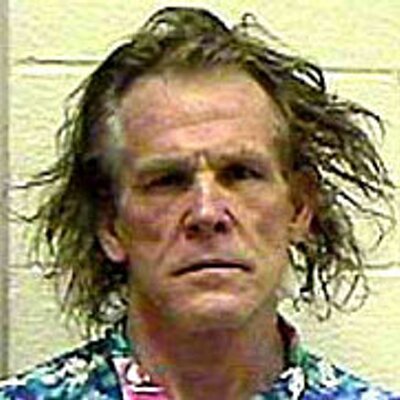
But Newman died, and Nick Nolte took his place, and while I was amused by the I-think-intentional resonance with this...
... I was annoyed by all the forced buddy-pic humor that replaced the relationship that Bill Bryson described in the book. I expected the film to have the 2 men talking a lot, though in the book, it's quite clear that the men barely ever talk. But the banter was either boringly stupid — not the people in the theater didn't laugh on every cue — or stupidly profound — such as looking at the stars and deciding that we are very small. If only you could look at the protons, you could decide that you are quite huge. Or just read Bill Bryson's "A Short History of Nearly Everything:" and he'll make you see it in your mind's eye:
No matter how hard you try you will never be able to grasp just how tiny, how spatially unassuming, is a proton. It is just way too small. A proton is an infinitesimal part of an atom, which is itself of course an insubstantial thing. Protons are so small that a little dib of ink like the dot on this “i” can hold something in the region of 500,000,000,000 of them, or rather more than the number of seconds it takes to make half a million years. So protons are exceedingly microscopic, to say the very least.
"In my mind's eye" comes from Shakespeare. Here's a block of text from another Bill Bryson book, "Shakespeare":
Just a small sampling of phrases originally found in Shakespeare’s works include flesh and blood, bated breath, tower of strength, foul play, foregone conclusion, good riddance, dead as a doornail, fool’s paradise, heart of gold, Greek to me, fancy-free, devil incarnate, one fell swoop, for goodness’ sake, vanish into thin air, play fast and loose, eaten me out of house and home, elbow room, go down the primrose path, in a pickle, budge an inch, cold comfort, household word, full circle, salad days, in my heart of hearts, in my mind’s eye, laughing stock, love is blind, lie low, naked truth, neither rhyme nor reason, star-crossed lovers, pitched battle, pound of flesh, sea change, make short shrift, spotless reputation, set my teeth on edge, there’s the rub, too much of a good thing, what the dickens, and wild goose chase.
Must I get back to my list of many shots I can take at the movie "A Walk in the Woods"? They added sexual things (even though the movie is generally overly, stupidly "family friendly"). There was a sequence — completely made up — with Mary Steenburgen as the owner of a crappy motel, and she tries to put the move on Redford after he comes out of his room to the motel office to ask for towels. He's wearing a nice bathrobe and leather slippers. Who, going out on a months-long hike, would put a bathrobe and slippers in his backpack?! In the book-world of Bill Bryson, there is absolutely no chance that he would be unfaithful to his beloved wife or even that he would amuse us with the slightest thought of being unfaithful to her. The sexual temptation scene was just squicky.
The movie complicates the relationship with the wife — perhaps to give the actress Emma Thompson something to do. It has her opposing the trip and trying to scare him with gruesome information about things that could go wrong in the woods. But Bill Bryson, the author, absolutely loves to find out about terrible things that can happen and to amuse use with the details. It's almost the main thing he does, but the movie transplants that aspect of his character into his wife, making her seem like a female stereotype — fussy, fretting — and making him seem alienated from her — and like more of a male stereotype.
The movie is full of shallow references to a fear of death and even begins with a funeral — as if Bryson's reason for walking is that he's freaked out about dying and needs to act — act! — before it's too late. And Redford must act. He must act because he's an actor. We must see his face on the big screen, which is not as it appears in my mind's eye, but dominated by those awful Chicklet veneers that have replaced normal teeth among the pretty people and topped with something I want to call a "wig hat." I did not enjoy spending 2 hours surveying the landscape of his face.
I thought I was going to get to see the landscape of the Appalachian Trail — all those fine and varied views from mountaintops and within forests. Where was the detail? Where was the cinematography? What is the big screen for? As I said, there are so many shots I could take at this movie. But this is the deal breaker. Show me the Appalachian Trail!
At one point in the movie, early on, somebody disparages the idea of walking the Appalachian Trail by saying you could see the whole thing in a 4-minute video on YouTube. That's quite a taunt to us movie goers! We're stuck here for 2 hours and had to pay $10, and I bet that 4-minute video on YouTube gives us a better vision of the trail. What the hell am I doing here?
... in the context of this morning's post, "Can Mommy Bloggers Still Make a Living?," about the troubles a mommy blogger has adapting to "native" advertising, that is, monetizing the blog by accepting money to promote products in what looks like regular blog posts. For a mommy blogger, that means integrating your writing about your children with praise for various foods, cleaning products, and what-all. The famous mommy blogger Heather Armstrong said: "The problem is I have to give my readers what they want, I have to give the brand what they want, and I have to be authentic to who I am. And combining all three of those needs is so so so exhausting that I was having panic attacks routinely."
The famous quote is, actually, "Sincerity. If you can fake that, you've got it made." Wait. Sidetrack: What's the difference between "authenticity" and "sincerity"? I ask the question out loud and then answer it before Meade takes a shot at it. I say, "'Sincerity' is when you believe your own bullshit," then add, "You know, sincerity is a big topic I teach about in Religion and the Constitution." That's a topic I've discussed here. It's my absolute favorite topic in law teaching. "Authenticity" is more objective: Are you really what you purport to be?
Anyway, the famous quote is attributed to George Burns. Interestingly, last night I watched an episode of the old Burns and Allen TV show — this one (the only one filmed in color):
The reason I watched that was that I was thinking about Gracie Allen because the new puppy — blogged just below this post — is named Gracie. "Was she named after the great comedienne?" I asked the kids, who didn't know, but said another possibility had been Lucy — strong evidence of yes.
Bryson's is my go-to voice for audiobooks to fall asleep to. I have a decades-old habit of listening to audiobooks all night, and there's something about Bryson's voice — he's lived in Britain for 20 years after growing up in Des Moines — that works like none other. I've listened to "A Walk in the Woods" hundreds of times. And I will go out and see that movie as soon as I can, even though I haven't gone out to see one single movie in over a year.
The interviewer, Ana Marie Cox, asks him "What do you think of the fact that your home state has such an important role in our presidential politics?" He says:
I’m obviously biased here, but I’ve always thought that the Midwest is the most sane and sensible part of the country. And the closer you get to Iowa, the more it becomes that way. I really do sincerely feel that there’s a bedrock decency there. It’s the state’s finest quality.
For much more about Iowa from Bryson, read "The Life and Times of the Thunderbolt Kid," his memoir about growing up in a particular place. And time — beginning, like me, in 1951.
I'm excited about it — even though I almost never go to the movies — because I love the book and because I love the actress who plays Mary Ellen (a secondary character in the book, a hilariously annoying woman). The actress is Kristen Schaal. I know her from "Flight of the Conchords" — she was the band's only fan — but you may know her as Hazel Wassername from "30 Rock."
William Knowlton Zinsser was born in Manhattan on Oct. 7, 1922. He escaped the urgings of his father to join the family’s shellac business but could not escape his mother’s counsel that being cheerful was a Christian obligation.
I am a participant in the Amazon Services LLC Associates Program, an affiliate advertising program designed to provide a means for me to earn fees by linking to Amazon.com and affiliated sites.
Encourage Althouse by making a donation:
Make a 1-time donation or set up a monthly donation of any amount you choose:




 Posts
Posts


